
Biopharma Operational Workflows
Fixing Manual Processes in Regulated Environments
Biopharma
Clinical Ops
Regulatory
Supply Chain
Legacy tools, spreadsheets, and email-driven handoffs were creating delays and compliance exposure. The redesign introduced structured, role-based workflows that improved speed, visibility, and audit readiness across biopharma operations


Overview
Redesigning fragmented biopharma workflows to reduce friction while enforcing compliance and accountability

My Role
Lead UX/Process Specialist, covering interviews, process mapping, workflow redesign, and system UX
The Problem
Manual Processes Were Slowing Work and Putting Compliance at Risk
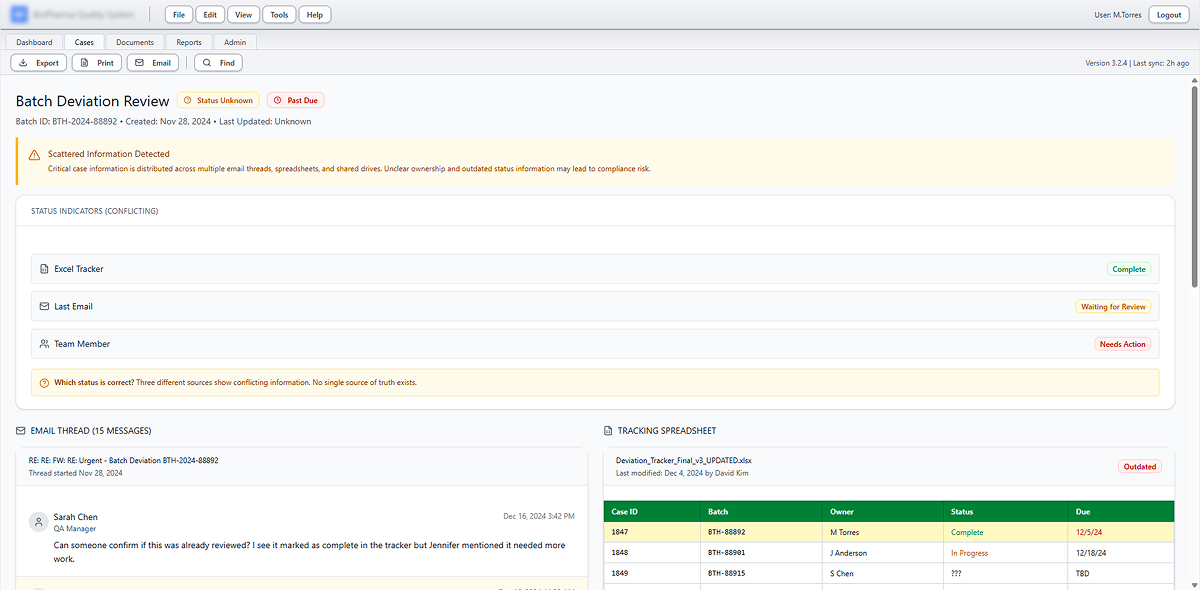
Teams were running multi step workflows using legacy systems, Excel files, and email chains. With so many manual handoffs, context kept getting lost, timelines slipped, and compliance exposure grew
- Handoff delays
- Compliance exposure
- Zero visibility
- Process inconsistency
What I Did
The goal was to deeply understand every step of the workflow, remove anything unnecessary, and design a system that supports the correct way of working by default
End to End Workflow Discovery
- Ran interviews and workshops across Clinical Ops, Regulatory, QA, and Supply Chain
- Mapped existing As Is workflows, including informal handoffs and shadow processes
- Identified bottlenecks, rework loops, manual checks, and compliance risk points
- Documented dependencies between roles, approvals, and artifacts
As Is → To Be Process Redesign
- Simplified multi step workflows by removing redundant actions
- Defined a single source of truth for each workflow
- Resequenced steps to match real operational and regulatory logic
- Designed To Be flows that enforce the correct order by default
Guided Workflow UX
- Designed a structured, step by step flow that prevents skipping required steps
- Introduced a dynamic stepper to show progress, current state, and what’s next
- Used context aware forms to show only relevant inputs per role and step
- Reduced cognitive load and eliminated “wrong form / wrong time” errors
Automated Handoffs & Role-Based Routing
- Replaced email driven handoffs with system controlled task routing
- Defined role based ownership and permissions at each step
- Introduced mandatory digital sign off where required
- Ensured every transition created a traceable, timestamped record
The Solution
Everything was redesigned around one idea:
Make the compliant path the easiest and only path
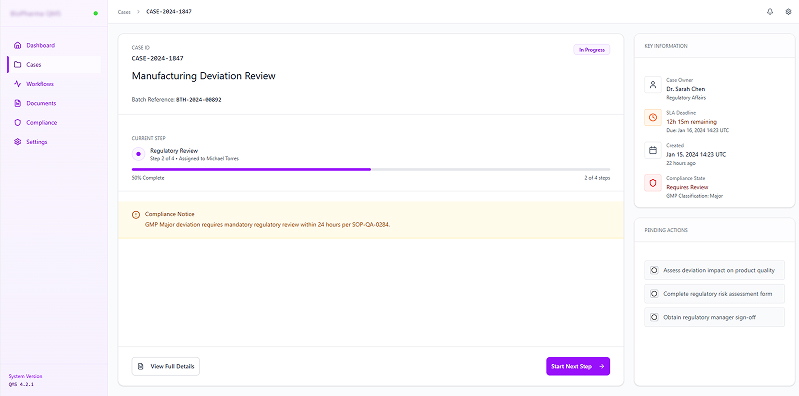
Dynamic Stepper & Guided Flow
- A horizontal dynamic stepper showing current step, next steps, and overall progress
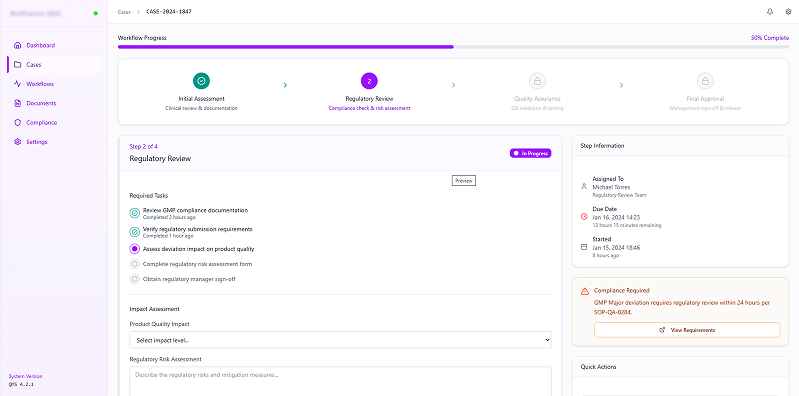
- Context aware fields, only the required inputs for that user/role are shown
- Reduced cognitive load and eliminated “wrong form” errors
Automated Digital Handoffs
- Role based routing automatically sends the task and documentation to the next user
- Mandatory digital sign off replaces manual signatures and creates a validated audit trail
- Ensures CFR Part 11 aligned behavior without extra user effort
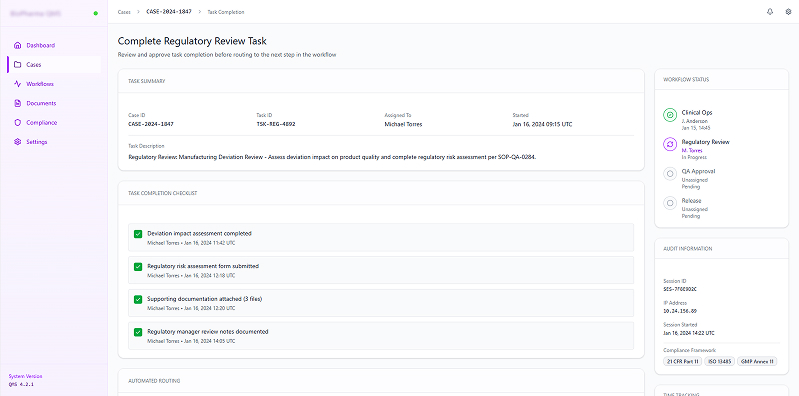
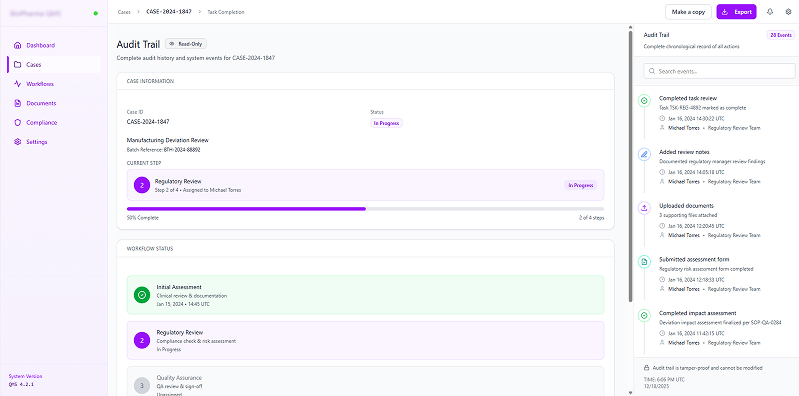
Central Audit Trail & Full Visibility
- A real-time process history panel tracking every action, timestamp, and decision
- Management gets instant visibility
- QA gets a clean, complete audit log without chasing teams
One Process, One Source of Truth
Every workflow starts in a single system, no emails, no side files, no missing context
Always Know Where You Are
A guided, step-by-step flow that enforces the correct sequence, no skipped steps
Only What You Need, Nothing You Don’t
Users see only the fields and actions relevant to their role and step
No Emails, No Guesswork
Tasks move automatically to the next owner with mandatory digital sign off
Every Action, Fully Traceable
A complete, real-time audit trail, ready for QA and regulatory review
Impact & Results
Faster Workflows, Predictable Handoffs, Stronger Compliance
| Metric | Before | After | Change |
|---|---|---|---|
| Process Throughput | Baseline | 1.45× | +45% |
| Critical Handoff Time | 3.5 days | <4 hours | 95% faster |
| Manual Error Rate | 8.2% | 1.5% | 82% reduction |
| Visibility | Hours (manual investigation) | Real time | Immediate |
A 45% jump in throughput shows that UX directly boosted operational capacity. By embedding regulatory rules into the workflow, we reduced risk while making the whole process noticeably faster
Got a similar problem?
Let’s talk